관계절
관계절을 사용하여 추가 정보 알려주기
The man who painted your house was very professional.
당신의 집을 칠한 사람은 매우 전문적이었습니다.
이 문장은 굵게 표시된 명사에 관한 정보를 제공합니다.
The company which I used to work for has just been sold.
제가 다니던 회사가 최근 매각되었습니다.
관계절이 뭔가요?
사람, 사물 및 사건에 관한 정보를 제공하기 위해 관계절을 사용할 수 있습니다.
관계절은 관계대명사 who, which, that 및 whose로 시작합니다.
| The man who painted your house was very professional. |
| The company which I used to work for has just been sold. |
- I met a lady whose son is a football player.
나는 축구 선수인 아들을 둔 한 여성을 만났습니다.
- I like the cakes that have cream on them.
나는 크림이 들어있는 케이크를 좋아해요.
유용한 팁!
관계절을 사용하지 않고 형용사와 형용사구를 사용해 명사에 관한 정보를 제공할 수 있습니다.
| I like blue cars. I like cars with lots of space. 나는 파란 차를 좋아한다. 나는 공간이 많은 차를 좋아한다. |
관계절은 어떻게 만드나요??
관계절에는 동사가 포함되며 명사에 관한 정보를 제공합니다.
| I like cars that are blue. |
| I like cars which have lots of space. |
-
I like people who are funny.
저는 재미있는 사람들이 좋습니다.
-
I have a friend that lives near you.
내 친구가 네 집 근처에 살아.
-
I have a pen that you can borrow.
빌려줄 펜이 하나 있어.
-
It's a company which produces mobile phones.
이곳은 휴대폰을 생산하는 회사입니다.
-
The artist whose painting I bought.
제가 산 그림을 그린 사랍입니다.
관계 대명사 (종류)
사람의 경우 'who' 또는 'that'을 사용할 수 있습니다.
| The lady who / that owns the business. |
사물의 경우 'that' 또는 'which'를 사용할 수 있습니다.
| The car that / which I bought. |
소유를 나타낼 때는 'whose'를 사용합니다.
| This is the man whose art I was telling you about. (즉, 그 남자의 작품임을 의미함) |
관계 대명사 생략 과 유지
경우에 따라, 문장 2에서와 같이 관계대명사가 생략될 수 있습니다.
이는 대명사가 관계절의 주어가 아닌 경우에 발생합니다.
-
The lady I live with.
저와 함께 사는 여성입니다.
The lady (that) I live with. - 'I'는 관계절의 주어이고, 'that'은 선택 사항입니다.
대명사가 관계절의 주어일 경우에는 반드시 해당 대명사를 사용해야 합니다.
| I love books that make me think. - 'that'이 관계절의 주어이기 때문에 반드시 필요합니다. |
-
The person who I live with.
저와 함께 사는 사람입니다.
-
She's the type of person who works very hard.
그녀는 매우 열심히 일하는 사람입니다.
-
I have a car which is 50 years old.
저는 50년 된 차가 있어요.
-
I live with people who study at your university.
그쪽하고 같은 대학 다니는 친구들하고 살아요.
-
The man whose house was broken into.
저 사람 집이 도둑을 맞았어요.
-
Lots of people I meet have tattoos.
제가 아는 사람 중 많은 사람이 문신을 했어요.
-
You should buy food which is locally grown.
현지에서 재배하는 음식을 사야 해요.
-
I like people who know how to enjoy themselves!
즐길 줄 아는 사람들을 좋아해요!
-
I want a mobile phone which has a camera.
카메라가 있는 휴대폰이 필요해요.
-
The author whose book won the prize.
저 작가의 책은 상을 받았어요.
-
My father is the one that does the cleaning.
우리 아버지는 청소하시는 분입니다.
Third conditional
기능과 형태를 배워 보세요

What is the third conditional for?
We use the third conditional to talk about a past situation that didn't happen.
'Third conditional'은 일어나지 않은 과거 상황에 대해 말할 때 사용해요.
The third conditional is used to talk about
● imagine the past differntly
● unreal past situations
● imagined past consequences
- A conditional sentence has two parts – an unreal result and a condition.
Condition: if + past perfect - If my parents hadn’t met, I wouldn’t have been born.
Result: would + have + past participle. - If my parents hadn’t met, I wouldn’t have been born.
condition result If I hadn’t driven too fast, I wouldn’t have had a car crash.
-
The building wasn't destroyed because people protested.
사람들이 항의했기 때문에 건물은 파괴되지 않았습니다.
-
If you hadn't lied to us , we would have invited you .
당신이 우리에게 거짓말을 하지 않았더라면 우리가 당신을 초대했을 거예요.
-
If you had answered the phone, you would have known we weren't home.
당신이 전화를 받았더라면 우리가 집에 없었다는 걸 알았을 거예요.
-
If you had given me the book, I would have read it.
당신이 나한테 책을 줬더라면 내가 읽었을 거예요.
-
He would have been on the call if his internet hadn't been down.
인터넷이 다운되지 않았더라면 그는 통화에 참여했을 거예요.
-
She would have visited us if she had known the address.
주소를 알았더라면 그녀는 우리를 방문했을 거예요.
-
If the subscription had cost more, I would have cancelled it.
구독료가 더 비쌌더라면 나는 취소했을 거예요.
-
If I had noticed you, I would have said hello.
당신이 있는 걸 알아챘더라면 인사를 했을 거예요.
-
If my laptop hadn't had antivirus software, it would have been hacked.
내 노트북에 안티바이러스 소프트웨어가 없었더라면 해킹당했을 거예요.
-
I wouldn't have got rid of my old mobile if it had worked properly.
내 오래된 휴대폰이 제대로 작동했더라면 없애지 않았을 거예요.
-
I wouldn't have taken the taxi if the bus had come on time.
버스가 제시간에 왔더라면 택시를 타지 않았을 거예요.
'Third conditional' 발음하기
''d'와 약한 'have'에 주목하세요

I'd have caught the flight if there hadn't been so much traffic.
"I'd" means "I would".
In everyday fast speech, "would" in conditionals is abbreviated to "'d".
If you'd cancelled the meeting, we'd never have met.
"You'd" means "you would".
If you'd cancelled = If you had cancelled; it's a condition clause.
"'d" in the third conditional !
In everyday speech, "had" and "would" in the third conditional become "'d".
| Unnatural slow speech | I would have baked some cookies if I had had a better oven. |
| Natural speech | I'd have baked some cookies if I'd had a better oven. |
Condition clause "'d" = had; result clause "'d" = would
-
We'd have solved the problem if you'd been open about it.
당신이 그 문제에 대해 숨기지 않았더라면 우리가 그 문제를 해결했을 텐데.
-
Seriously, I'd have complained if you'd felt dissatisfied.
진지하게, 당신이 불만족스러웠다면 내가 항의했을 거예요.
-
She'd have returned the book if she hadn't lost it.
책을 잃어버리지 않았더라면 그녀가 책을 반납했을 거예요.
The weak "have"
In everyday speech, "have" in the third conditional is not stressed and sounds weak, a little bit like "of".
| unnatural slow speech | natural everyday speech |
| I would have eaten breakfast if I had felt better. | I'd have eaten breakfast if I'd felt better. |
-
She wouldn't have offered her help if you hadn't told her to.
당신이 그녀에게 그러라고 말하지 않았더라면 그녀는 도움을 제공하지 않았을 거예요.
-
If my alarm had gone off , I wouldn’t have been late to work.
내 알람이 울렸더라면 출근이 늦지 않았을 거예요.
-
Karen wouldn't have phoned the police if she hadn't been afraid.
카렌이 두렵지 않았더라면 경찰에 전화하지 않았을 거예요.
-
If the baker's hadn't closed, we'd have bought some more bread.
빵집이 문 닫지 않았더라면 우리는 빵을 좀 더 샀을 거예요.
문맥 속의 'third conditional'
우연한 발견에 대해 읽어 보세요

to run out of
...을 다 써 버리다, ...이 바닥나다
우유가 또 떨어졌어요.
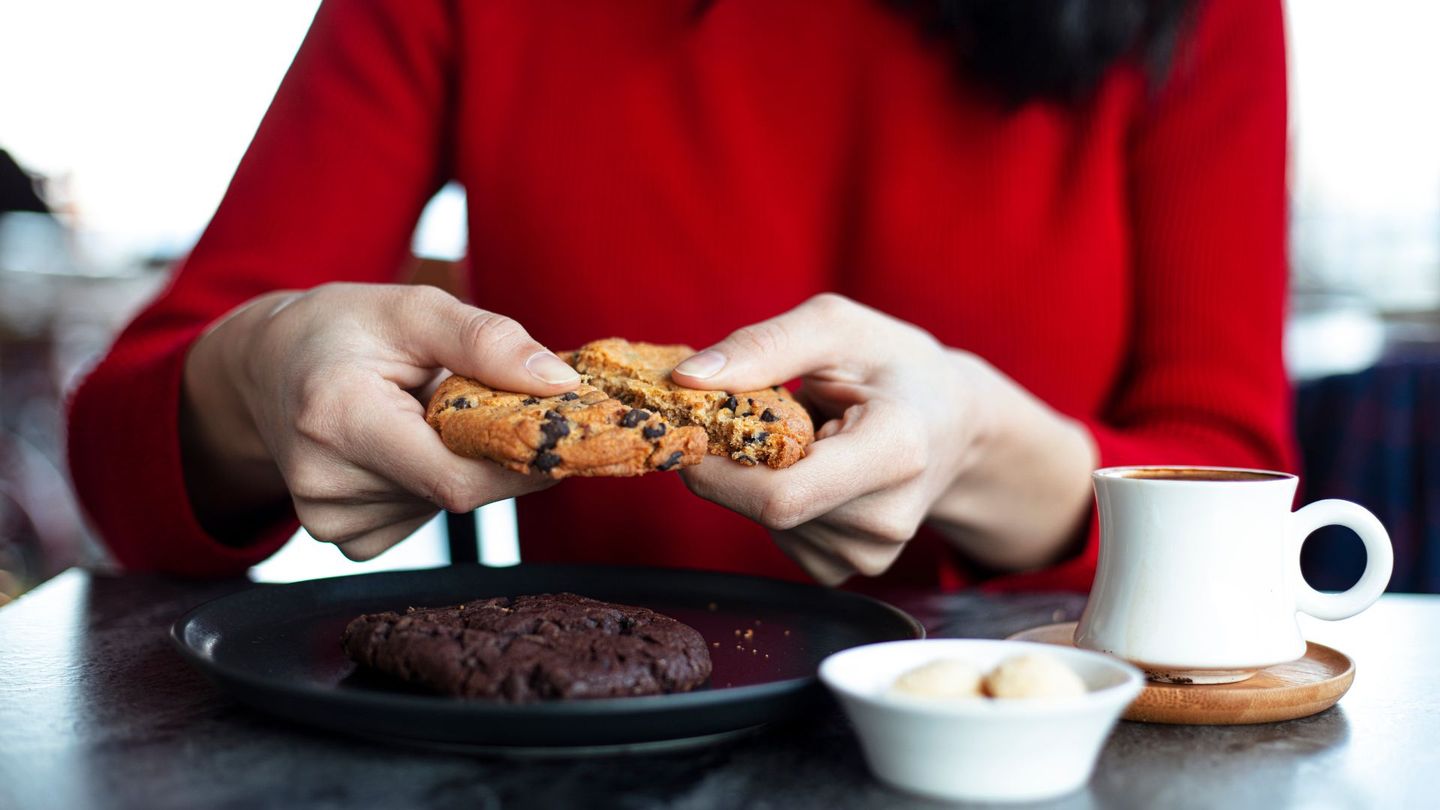
If Mrs Wakefield hadn’t run out of baker’s chocolate...
Chocolate chip cookies were invented when Mrs Wakefield, a restaurant owner in Massachusetts, USA, was making her regular chocolate cookies. She ran out of baker’s chocolate, so she replaced it with broken pieces of chocolate. She thought it would melt and look like her usual chocolate cookies but it didn’t. Instead, the chocolate chip cookie was born. It was an accidental discovery.
It would never have happened if Mrs Wakefield hadn’t run out of baker’s chocolate. If she hadn’t run out of her usual chocolate, she wouldn’t have replaced it with broken pieces of chocolate. And if the chocolate pieces had melted, chocolate chip cookies wouldn’t have been born that day.
웨이크필드 부인이 빵집 초콜릿이 떨어지지 않았다면...
초콜릿 칩 쿠키는 미국 매사추세츠의 레스토랑 주인인 웨이크필드 부인이 일반 초콜릿 쿠키를 만들 때 발명되었습니다. 그녀는 제빵사의 초콜릿이 부족하여 깨진 초콜릿 조각으로 교체했습니다. 그녀는 그것이 녹아서 평소의 초콜릿 쿠키처럼 보일 것이라고 생각했지만 그렇지 않았습니다. 대신 초코칩 쿠키가 탄생했습니다. 우연한 발견이었습니다.
Wakefield 부인이 빵집 초콜릿이 떨어지지 않았다면 그런 일은 결코 일어나지 않았을 것입니다. 평소에 먹던 초콜릿이 떨어지지 않았다면 깨진 초콜릿 조각으로 바꾸지는 않았을 것이다. 그리고 만약 초콜릿 조각이 녹았다면 그 날 초코칩 쿠키는 탄생하지 않았을 것입니다.
Frank Epperson was 11 years old when he invented the Popsicle. One night, he left a cup with a soda outside his house overnight. There was also a stick in the cup. It was a freezing night and when he woke up the next morning, he discovered the drink had frozen to the stick.
프랭크 에퍼슨(Frank Epperson)은 아이스바를 발명했을 때 11세였습니다. 어느 날 밤, 그는 밤새도록 집 밖에 탄산음료가 담긴 컵을 두고 왔습니다. 컵 안에도 막대기가 들어 있었어요. 추운 밤이었고 다음날 아침에 일어났을 때 그는 음료수가 막대기에 얼어붙은 것을 발견했습니다.
-
If it hadn't been a freezing night, the drink wouldn't have frozen to the stick.
얼어붙을 정도로 추운 밤이 아니었더라면 음료는 막대에 붙어 얼지 않았을 거예요.
-
Frank wouldn't have invented the popsicle if he hadn't left a cup with a soda drink outside his house.
프랭크가 집 밖에 탄산음료가 든 컵을 내놓지 않았더라면 막대 아이스크림을 발명하지 않았을 거예요.
-
If there hadn't been a stick in the cup, the drink wouldn't have frozen to the stick.
컵 안에 막대가 없었더라면 음료는 막대에 붙어 얼지 않았을 거예요.

thin
얇은
난 얇은 팬케이크를 좋아해요.
thick
두꺼운
This slice of bread is too thick.
이 빵 조각은 너무 두꺼워요.

The first potato chip was invented by George Crum in 1853.
He ran a restaurant and had a customer who was constantly complaining about his potatoes.
Apparently, they were too thick.
At some point, Crum got so annoyed with the customer that he decided to cut the potatoes so thin that the customer would leave the restaurant. But the customer didn’t get angry, quite the opposite. He loved the new chips. After that, they became a regular item on the restaurant’s menu.
최초의 감자칩은 1853년 조지 크럼(George Crum)에 의해 발명되었습니다.
그는 식당을 운영했는데, 감자에 대해 끊임없이 불평하는 고객이 있었습니다.
분명히 너무 두꺼웠어요.
어느 시점에서 Crum은 고객에게 너무 짜증이 나서 고객이 레스토랑을 떠날 정도로 감자를 너무 얇게 자르기로 결정했습니다. 하지만 고객은 화를 내지 않았습니다. 정반대였습니다. 그는 새로운 칩을 좋아했습니다. 그 후로 그 식당의 단골 메뉴가 되었습니다.
-
If Crum hadn't got so annoyed with the customer, he wouldn't have cut the potatoes extremely thin.
크럼이 손님에게 그렇게 짜증이 나지 않았더라면 감자를 엄청 얇게 썰지 않았을 거예요.
-
The new chips wouldn't have become a regular item on the restaurant menu if the customer hadn't loved them.
손님이 엄청 좋아하지 않았더라면 새로운 칩은 레스토랑 고정 메뉴에 오르지 않았을 거예요.
'Busuu > Level B1(중급자)' 카테고리의 다른 글
| B1-C16 간접 화법 (0) | 2023.11.16 |
|---|---|
| B1-C16 뉴스에 대해 이야기하기, 수동태 복습, 직접화법 (0) | 2023.11.15 |
| B1-C14 법조동사가 사용된 수동태,과거분사 발음하기 (0) | 2023.11.13 |
| B1-C14 현재진행형, 건축물 묘사하기, 수동태 (0) | 2023.11.10 |
| B1-C13 past perfect(과거완료), 사랑 이야기 속의 문법 (0) | 2023.11.09 |


